EMBRACE TECHNOLOGY FEARLESSLY

EMBRACE TECHNOLOGY FEARLESSLY
www.econnectionmaine.com

Friday, April 19, 2013

Do you Know How to Back up your Computer Files?


The first thing you need to do is to decide on the proper backup media for your needs.  Do some research on the advantages of each, and choose the one which will best suit your needs
Here are a some choices:

1.  Hard Drive (internal) - back up to another drive in your computer

2.  Flash Drive - A flash drive is a small storage device that can be used to transport files from one computer to another. They are slightly larger than a stick of gum, yet many of these devices can carry all your files.  
A flash drive is easy to use; simply plug your flash drive into a USB port. The USB port will appear on the back of a desktop computer’s PC tower or on the side of a laptop.

3. Online Backup -  A remote, online, or managed backup service, sometimes marketed as cloud backup, is a service that provides users with a system for the backup, storage, and recovery of computer files. This can be a free of paid service.


Instructions for backing up Documents to a Flash Drive

1. Double Click the “My Documents” folder located on your Desktop.

2. Once “My Documents” is open, hold down the CTRL key and tap the letter A- this will select all the files and folders

3. You’ll notice that all of the contents have been highlighted (turned blue) like
the image below.

4. Click EDIT again, but this time click COPY TO FOLDER

5. The following screen shows various locations that your files can be saved to.
Select the Flash Drive which may appear as “Removable Disk” (or choose
some other suitable location.)

6. Finally click COPY. 
      The progress of the data being copied will be displayed until the process is complete.
Once completed, you’ll have a full backup on your Flash Drive.


Below is a list of several free online backup plans .   SugarSync  seems to get the best reviews but all the plans listed are great options.
A free online backup plan is usually identical to the equivalent "pro" or "premium" plan offered by the same company. but it does not offer the same amount of storage. 
If the free plan has enough storage space for your data,  you can have a complete and permanent backup solution for free!

Comodo Backup
Comodo Backup Logo© Comodo Security Solutions, Inc.

Comodo Backup offers 5 GB of free online backup space.
Comodo's interface is really straightforward and easy to use, which is something I can't say about the desktop software component of most online backup services.


MiMedia Logo© MiMedia, Inc.

MiMedia's Free plan offers a whopping 7 GB of backup space for free.
 MiMedia's free 7 GB of online backup space is the industry's largest.
Real-time backup, online music, photo, and video players, and easy file sharing make MiMedia a pretty solid online backup option, free or otherwise


SugarSync Logo© SugarSync, Inc.
SugarSync offers 5 GB of online backup for free.
One of the great things about SugarSync is that it's more than just a great free online backup service: it's also a really slick way to sync your data between computers and other devices like your phone.

Wednesday, February 20, 2013


Computer Tips Everyone Might Find Helpful

1.  To quickly move between the fields of a web page try this; 

Say you're filling out an online form, e-mail, or other text field, To move quickly move from line to line, try by pressing the Tab key.    Shift + Tab, will  move the cursor back a line.
For example, if you're filling out your name and the next field is your e-mail address you can press the Tab key to switch to the e-mail field


2. Did you know....
      It is not necessary to type the 'www' or '.com' part of a web page. Type in just 'weather', or 'amazon' or 'econnection blog' ( you might need to add my name as I am not quite as well known as Amazon or the weather!) on the address bar.


3. Easy Internet browser shortcuts.


 Below are a few of my top suggested Internet browser shortcuts.

  • - Hold down the Ctrl key and press the + or - to increase and decrease the size of text.
  • - Press F5 to refresh or reload a web page.
  • - Press F11 to make the Internet browser screen full screen. Press F11 again to return back to the normal view.
  • - Press Ctrl + B to open your Internet bookmarks.
  • - Press Ctrl + F to open the find box in the browser to search for text within the web page you're looking at.
Apple Short Cuts
  • COMMAND + HOME: Go to your Home page.
  • END: Scroll to bottom left corner of a web page.
  • COMMAND + D: Add a Bookmark.
  • COMMAND + F: Find.
  • COMMAND + N: Open new window.
  • COMMAND + Q: Quit Safari.
  • COMMAND + R: Reload page.


Thursday, January 10, 2013

Windows 8 is Kind of Fun

Windows 8 Basics


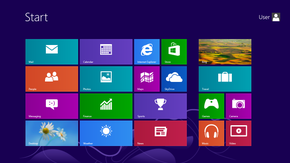
Windows 8 introduces significant changes to the operating system's platform, primarily, featuring a new Start screen with a grid of dynamically updating tiles that represent applications. 

The Start screen replaces the "Start menu" of earlier Windows versions. 

I, personally,  like the change and found it easy to transition from the previous Windows programs.


 Must Know Tips


The hottest quick-key short cuts.
  • Press the Windows Key, (located at the bottom your your keyboard) to toggle back and forth between the familiar desktop screen and the new tiled start screen. 
  • The Windows key + E opens Explorer for quick access to folders.
  • The Windows key + X to get to the Quick Access Menu.
  • The Windows key + Z opens All Apps.

Customize your tiles
Windows 8 tiles

  • Move any tile by clicking and dragging the tile. 
  • Use your mouse wheel to scroll left-to-right through your tiles.
  • Any desktop shortcut or program can be pinned to the Start screen by right-clicking the icon and choosing Pin to Start.
  • If there is a tile you want on your Taskbar, right-click the tile and choose Pin to taskbar.


Tuesday, December 11, 2012


Safe online shopping: Tips to avoid getting burned

You need to buy some gifts, and you need to buy them quickly. You can shop online with a nice glass of wine by your side!
Here are some easy ways to lock down your Web security this season, and still get all your shopping done in time.

Keep your browser updated

Start at the beginning. Whether you use Chrome, Firefox, Safari, or Internet Explorer, updating your browser will help to ensure that you’re getting the most up-to-date security protection.

Install malware-protection software

Another thing to check before you shop is your security software. The market has no shortage of utilities dedicated to protecting your computer from malicious attacks.
You can even find plenty of free applications for protecting your computer from malware and Internet attacks that could result from an unfortunate online shopping session. The bottom line: Anti-malware programs can't protect you from all attacks, But in this day and age, it's silly not to use some sort of baseline protection. I am a fan of MaywareBytes which can be downloaded for free from www.download.com

Buy from reputable online stores and sellers

Look for this logo when checking a site's legitimacy.
If you’ve never heard of the site you’re considering a purchase from, you have a number of ways to make sure it is legitimate.
Third-party organizations such as the Better Business Bureau Online and Truste give seals of approval to sites that meet their security and privacy standards.
Also, comparing products on sites like Bizrate can give you confidence that you're getting a fair price.

Look for the address-bar padlock symbol

A webpage should always be Secure Sockets Layer (SSL)-encrypted if you plan to use your credit card information to shop. SSL encryption ensures privacy by restricting the computers that can access the data being transferred, limiting access to you and the online retailer exclusively.
Most browsers indicate that the encryption is active with a padlock icon near the address bar, and the URL is preceded with https:// instead of http://, as shown below.
The padlock icon and 'https://' in Chrome.

Give out as little information as possible

Beware of nosy questions seeking personal information. For instance, a reputable online retailer will never need your Social Security number.
Generally it’s a good practice to give out the least amount of information the seller requires, so look over the required fields on forms and fill them out accordingly. Use the minimum number of fields that will allow your purchase to proceed.

Never give out your credit card number over email

It’s simple: Legitimate retailers will never ask for your credit card information or other sensitive personal details over email.
As mentioned above, the only time you should give out your credit card number and other personal info online is when you are on an SSL-encrypted webpage operated by a trusted retailer.

Know your rights

In the United States, online purchases you make with a credit card are protected by the Fair Credit Billing Act, which limits your responsibility for fraudulent or erroneous charges to $50.
Consumers are required to write a physical letter within 60 days detailing any complaint to the retailer, with a return receipt acting as proof that the creditor received the letter.
The Federal Trade Commission provides an example letter, so all you need to do is fill in the blanks with your information.

Use common sense

If a deal online seems too good to be true, it probably is.
If anything seems suspicious—for instance, if a retailer refuses to provide details on a product or avoids answering billing questions, or if you cannot find a phone number or address of the store—the best practice is to avoid it and shop with a tried-and-true online retailer instead.
Additionally, you should never feel pressured to give out information. If a retailer is requesting something from you that makes you uncomfortable, it's probably time to take your business elsewhere
.

Monday, October 15, 2012

BLOGGING


A blog is a personal diary. A daily pulpit. A collaborative space. A political soapbox. A breaking-news outlet. A collection of links. Your own private thoughts. Memos to the world.

Your blog is whatever you want it to be. There are millions of them, in all shapes and sizes, and there are no real rules.


The activity of updating a blog is “blogging” and someone who keeps a blog is a “blogger.” Blogs are typically updated regularly using software that allows people with little or no technical background to update and maintain the blog.

In simple terms, a blog is a web site, where you write stuff on an ongoing basis. New stuff shows up at the top, so your visitors can read what's new. Then they comment on it or link to it or email you. Note the comment link at the bottom of this blog.


Wednesday, September 19, 2012

Cut, Copy and Paste on an iPad


Best iPad Tips and Tricks

A mobile device has changed the ways you interact with the computer. It neither needs a mouse nor a giant physical keyboard any more.


How to Cut, Copy and Paste
This looks simple but can be tricky sometimes when you use different apps. In general, these steps can be used in Mail or some other apps:
  1. Cut, Copy and PasteDouble-tap to select a word, or tap once with two figures to select a paragraph. (Note)
  2. Drag the handles to adjust the area if needed, then select Cut or Copy.
  3. Tap an insert point then tap the cursor, or more directly, touch and hold an insert point.
  4. Select Paste.
Note: Step 1 doesn't work in a browser like Safari since "double-tap" has been used to enlarge a webpage. Instead, use "touch and hold" to copy text or an image. If "touch and hold" shows a block on a certain webpage, try "tap and touch-and-hold".

Sunday, August 26, 2012


Here is a Useful and not so well known
Google Chrome tip.

Did you know Chrome (a browser developed by Google) is a free download that can be used on Smart Phones, Macs, iPads and PC's.  I like it because I think it works pretty fast.
 
Here is one of the fun features it can do -

   Have you ever wanted the definition of a word quickly?  Just open Google Chrome and type in the word,  in the address bar line,whose definition you are looking for, press Enter.  

You will get the results of dictionaries and similar sites. Try typing in blogging and check it out!